
Two cementitious waterproofing coatings can look similar in a product list while serving different specified conditions. The useful question is not simply which is “stronger” or more flexible. It is which coating fits the substrate, water exposure and complete detail.
Coating roles
Similar-looking surfaces can serve different specified conditions
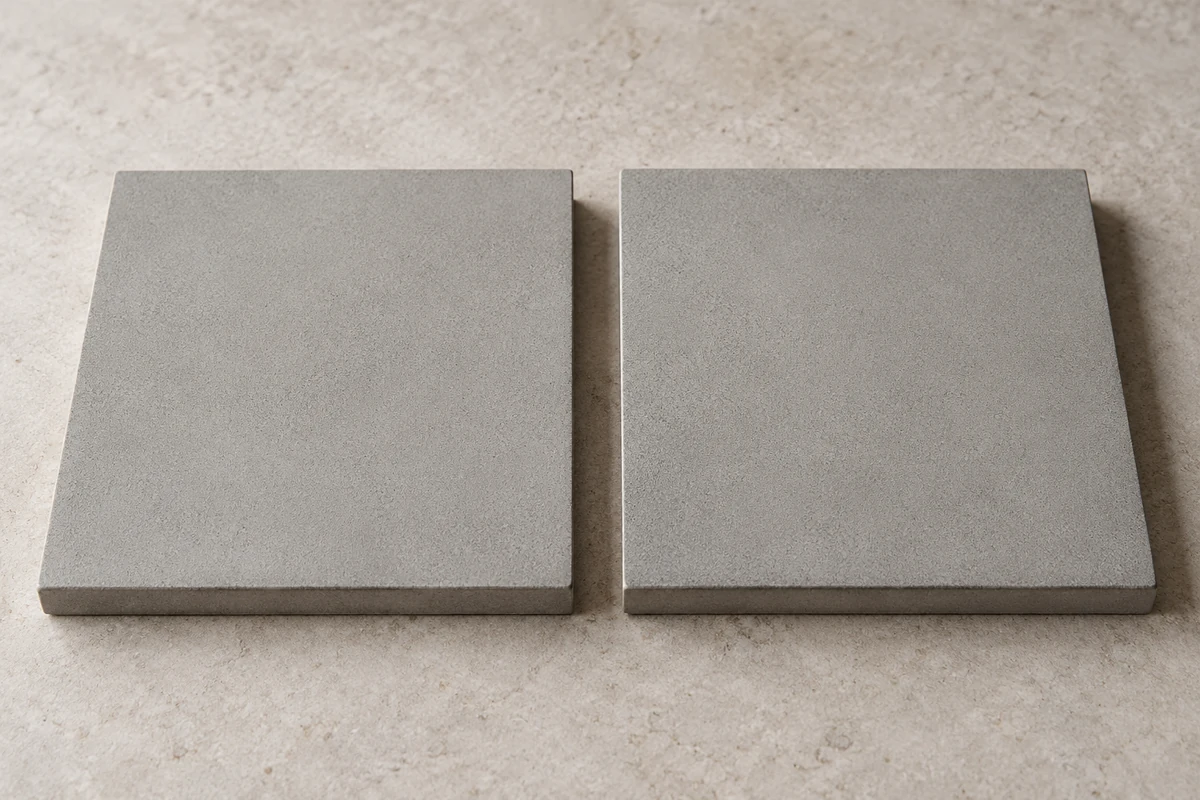
The samples are compared at the same scale and finish. Their appearance does not demonstrate flexibility or waterproofing performance.
Rigid cementitious
Confirm the supported substrate and specified waterproofing role.
Flexible / semi-flexible cementitious
Confirm the exact formulation and supplied component route.
- Substrate
- Water side
- Joints
Confirm the formulation
Flexible and semi-flexible routes can have different component requirements. Use the matching documents.
Resolve the joint detail separately
Coating flexibility is not permission to span an unassessed movement joint.
Begin with the surface and the water
Identify whether the substrate is concrete, masonry or another mineral material. Record its condition, repairs, active leakage, cracks and junctions. Establish which side receives the water and which side is accessible for treatment.
Those answers belong in the specification before choosing the coating. The existing basement-access guide explains positive- and negative-side access; this article focuses on the choice between coating roles.
What rigid and flexible mean here
VELOSIT WP 100 is the rigid cementitious coating reference for suitable concrete and masonry. Its manufacturer describes a supported rigid waterproof layer. That role should not be stretched into an unsupported movement-joint claim. WP 100 sheet, edition 1322.
VELOSIT WP 124 is polymer-modified and has flexible and semi-flexible formulation routes. The manufacturer separates the component requirements for those routes. A product name alone does not identify which supplied combination and application instructions govern the work. WP 124 sheet, edition 4525.
Flexibility can be relevant to a selected coating's crack-bridging role, but it does not give every junction unlimited movement capacity. Water direction, junction materials and the eventual covering still need a coordinated detail.
TENSYL CC101 is another existing two-part cementitious-coating reference. Confirm its exact current documentation and components; do not borrow another manufacturer's test results or mix instructions.
Ask for the complete coating arrangement
A useful enquiry identifies:
- Substrate, accessible face and water exposure.
- Existing cracks, active leaks and expected movement.
- Corners, pipes, drains and material transitions.
- Intended protective or decorative covering.
- The exact supplied components and current technical and safety sheets.
Active leaks and joint details need their specified treatment. For negative-side pressure, confirm the complete supporting system rather than transferring a positive-side coating description. Potable-water contact also requires its own evidence; use the drinking-water document checklist.
Compare the roles on the waterproofing page, then prepare a project enquiry. The aim is a documented, suitable build-up, not a coating chosen by its label alone.