
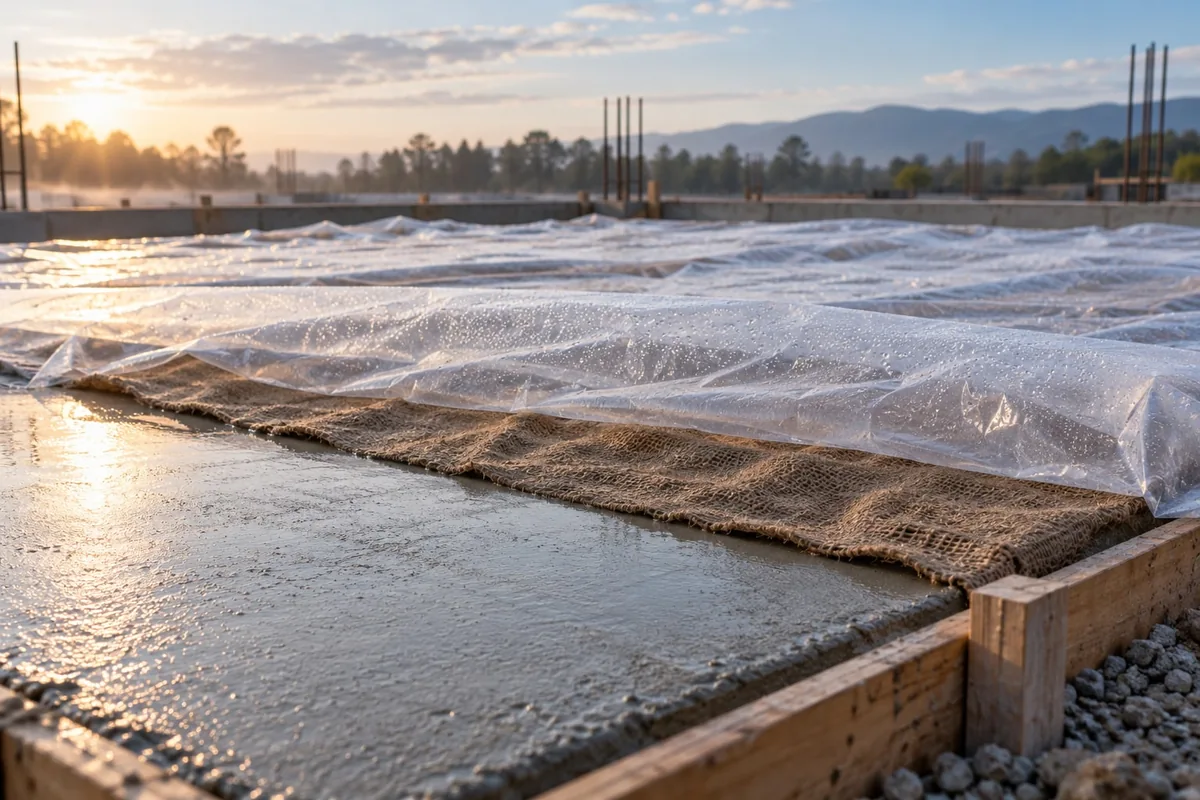
Choose the curing method before placing concrete, using the project specification, mix requirements, site conditions and intended surface finish. Water curing needs reliable, continuous moisture control. A membrane-forming curing compound needs correct application and a clear plan for any later bonded finish. Neither method works well when it is selected late and left unsupervised.
For epoxy, levelling layers, tiles or other bonded coverings, involve the flooring team early: curing can affect later surface preparation.
Curing supports hydration; it is not simply waiting
Concrete curing manages moisture and temperature so that the cementitious system can develop its intended properties. NRMCA's Curing In-Place Concrete guidance describes methods that supply moisture and methods that retain it. The correct arrangements depend on the concrete and the work.
Do not confuse curing with drying. Completing the curing period does not establish readiness for a coating. Separately verify the receiving system's substrate requirements.
Likewise, an evaporation-control measure used during placing or finishing is not automatically the complete curing system. Identify the purpose and timing of each measure in the method statement.
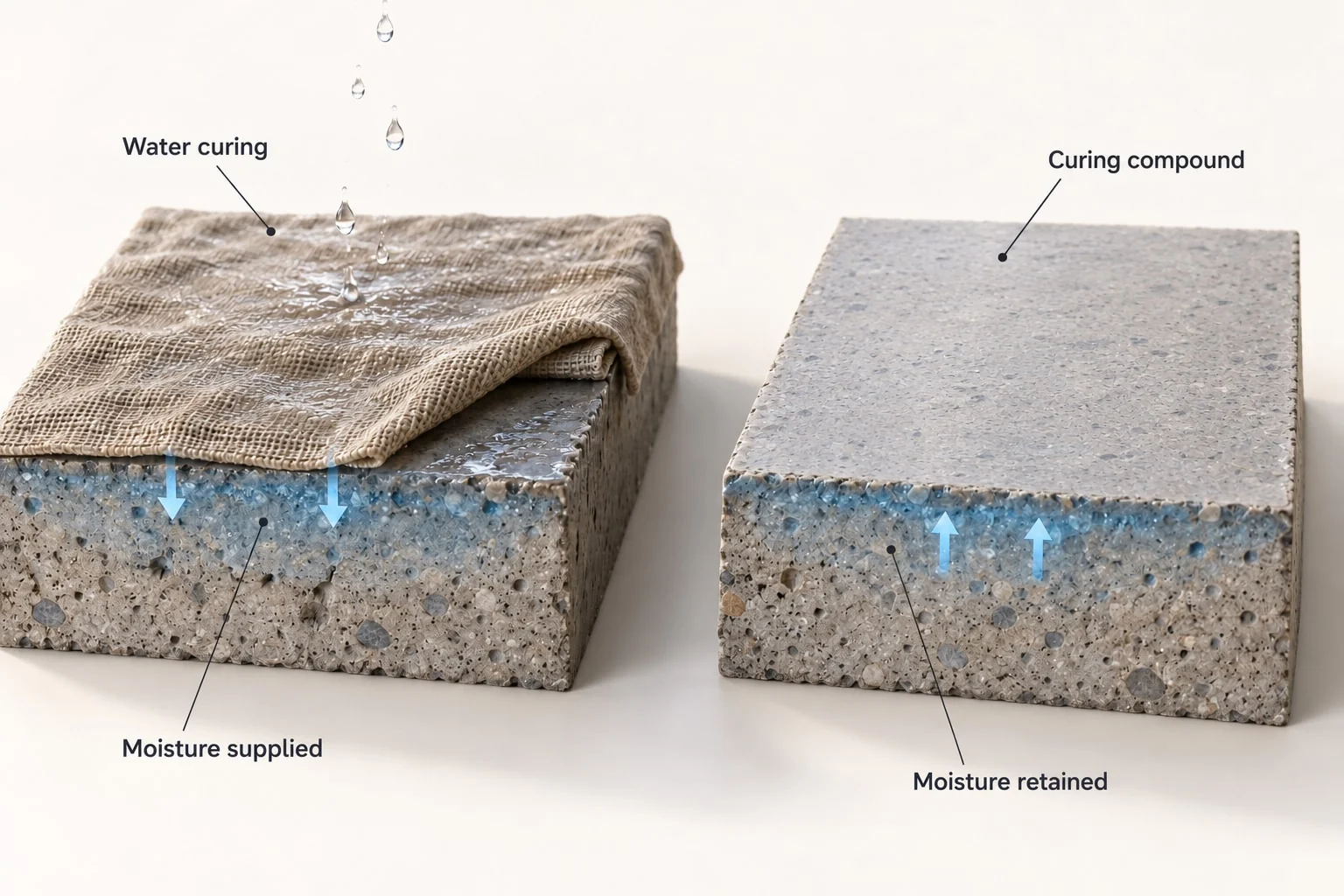
What water curing requires
Water-curing arrangements can include continuous wetting, suitable wet coverings or ponding where the design and site method permit it. The practical requirement is dependable moisture control, not an occasional splash followed by prolonged drying. NRMCA specifically cautions against alternating wetting and drying.
Before selecting this approach, ask whether the site can maintain the specified conditions through nights, weekends and interruptions. Assign responsibility for inspecting coverings, exposed edges and areas that are difficult to reach. Establish how water will be supplied and managed without creating other site hazards or damaging adjacent work.
What a curing compound does
A membrane-forming curing compound reduces moisture loss by forming a film over the concrete surface. The public scope of ASTM C309-25 describes compounds used to reduce water loss during the early-hardening period, including after initial moist curing or removal of forms.
A compound's suitability is not established merely by calling it “curing chemical.” Check its exact type, performance evidence, application instructions and restrictions. Confirm that it is accepted by the project specification and appropriate for the mix, exposure and surface.
The application plan should identify preparation and timing, required coverage, equipment, weather restrictions and protection. Obtain those requirements from the matched product documents. Do not dilute or alter the product because it is difficult to spray, or substitute an approximate rate from another brand's sheet.
Plan how the team will verify coverage and address missed or damaged areas under the approved procedure.
Compare the methods by the problem the site must solve
Can the team maintain the method reliably?
For water curing, examine supply, continuity, covering condition and supervision. For a membrane compound, examine application quality, access, equipment and protection of the film.
What does the concrete itself require?
Ask the designer and producer to confirm the curing requirements for the actual binder system and mix. A familiar routine from a different concrete is not proof of suitability. Where the approved method requires additional measures or a particular sequence, a generic product claim should not override it.
What happens to the surface later?
Record whether the concrete remains exposed or receives a bonded treatment. Include primers, screeds, levelling compounds, adhesives and coatings in that review.
Who will sign off the work?
Allocate responsibility for starting, monitoring and ending curing. Then allocate the separate responsibility for accepting the substrate before the next trade begins.
Curing-compound compliance does not prove coating compatibility
ASTM C309's scope focuses on defined curing-compound properties and refers elsewhere for special properties such as non-interference with adhesives. A statement of compliance with C309 should therefore not be read as blanket approval under every later floor system.
An accessible manufacturer example makes the issue concrete. The Sika Antisol E-15 WPK product data sheet, December 2022, version 01.01 requires remaining curing film to be removed before a subsequent screed or coating. That instruction belongs to that named product. It is not a removal specification for every compound, or evidence about a SEED product.
For the proposed curing compound and receiving system, obtain written compatibility or preparation requirements. If removal is required, agree the method and acceptance criteria before the floor finish is ordered. Do not assume that washing, light abrasion or the passage of time will achieve the specified result.
Curing completion is not flooring readiness
NRMCA's Concrete Slab Moisture guidance explains that slab moisture can affect floor coverings and non-breathable coatings, and that receiving manufacturers specify moisture limits. The correct test method and acceptance threshold must come from the applicable flooring system and project requirements.
Avoid approving a coating because the slab looks dry or has reached a familiar age. Confirm moisture condition, substrate soundness, cleanliness, profile, repairs and the treatment of joints under the receiving system's procedure. Investigate any unknown curing-compound history.
SEED's TENSYL Epoxy Flooring guide is relevant when discussing a later resin floor system. Its VELOSIT SL 501 guide concerns a cementitious underlayment before a selected finish. Neither link establishes that a particular curing film may remain beneath that system. Request the matched instructions and resolve compatibility for the actual build-up.
Make the decision before the concrete pour
A useful pre-pour record should confirm:
- Concrete mix and governing curing requirements.
- Intended later surface treatment or finish.
- Selected method and approved product documents, where applicable.
- Start criteria, duration or completion criteria, and weather response.
- Responsible people, resources and inspection arrangements.
- Treatment of interruptions, uncovered areas or damaged membrane.
- Handover records and requirements before the next layer.
If the final finish is undecided, document that uncertainty and agree the curing approach with the responsible designer.
Keep the selected product identity, batch information, application records and inspection observations in the handover file. SEED's technical-document hub can help frame requests for the downstream product information; the curing-product supplier must provide its own matched documents.
Frequently asked questions
Is water curing always better than a curing compound?
There is no useful universal answer. The approved method must meet the needs of the concrete and be reliable under the actual site conditions.
How many days should concrete be cured?
Use the project specification and approved procedure for the actual concrete and conditions. Do not replace them with one duration copied from a general article or from a different cement system.
Can epoxy be applied directly over a curing compound?
Only where the exact combination and preparation are accepted by the relevant system manufacturers and project requirements. Otherwise, resolve the required removal and substrate acceptance before application. A trial or test, where specified, must use agreed methods and criteria.
Does water curing eliminate the need for moisture testing?
No. Curing and readiness for a moisture-sensitive finish answer different questions. Apply the receiving system's specified moisture assessment regardless of the curing method used.