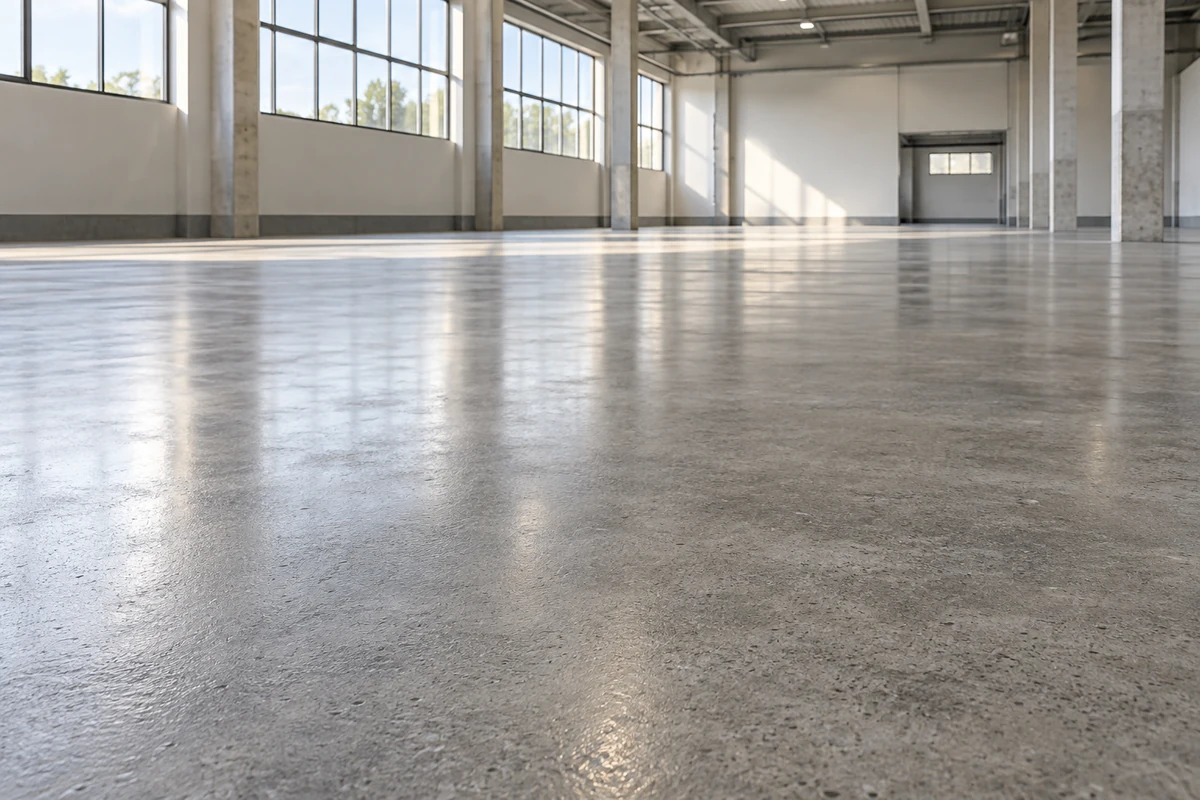
A floor quotation should describe what the finished floor must do, not just name a resin. A warehouse aisle, a reception area and a regularly washed room can need different combinations of texture, appearance, loading and cleaning resistance.
Start with the operating conditions, then compare complete systems. The primer, body layer, surface treatment and substrate requirements belong in the same decision.
Material families
Three binders. One project brief.
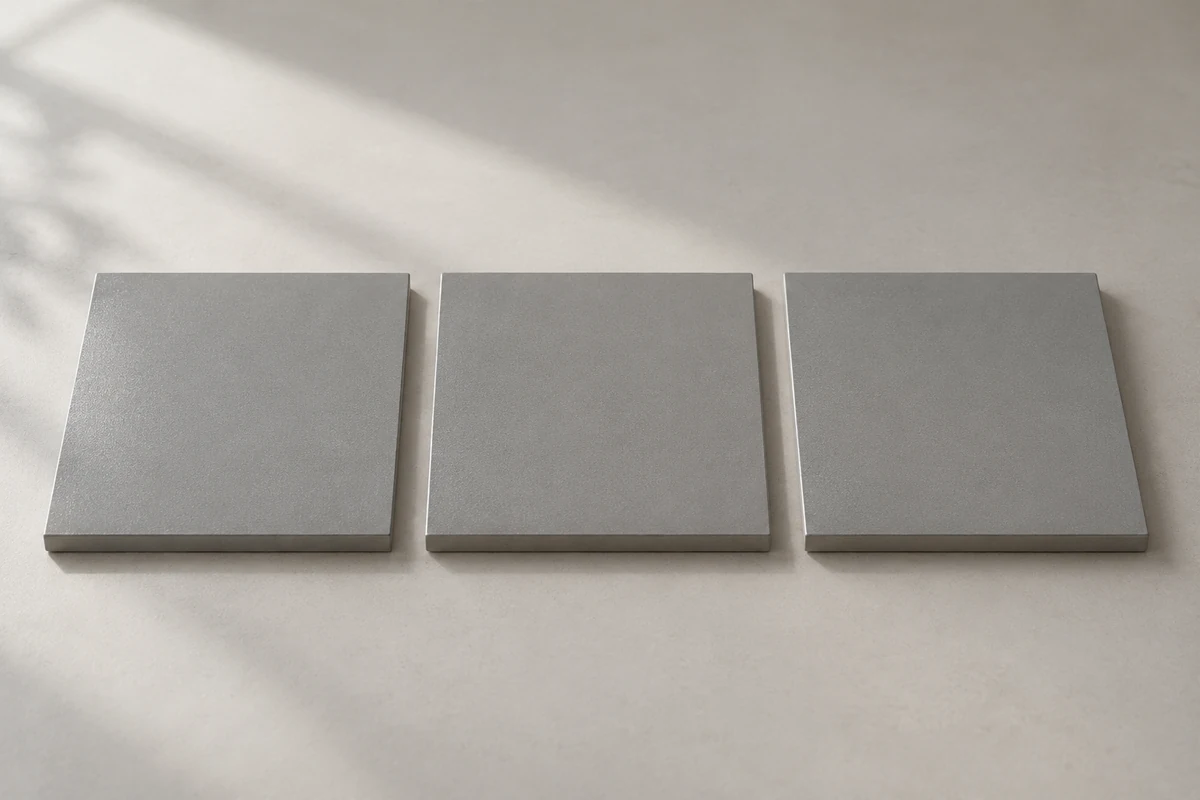
Comparable finish and lighting keep the focus on the binder description, rather than suggesting that gloss defines the material.
Epoxy
Epoxy resin
PU
Polyurethane resin
PU-cement
Polyurethane + cementitious materials
- Substrate
- Traffic
- Cleaning
- Finish
Compare the exact system’s documented duty, preparation and service requirements.
PU and PU-cement are included to explain specifications. Confirm the proposed manufacturer, system and local availability; inclusion here does not establish SEED supply.
Mineral wear surfaces are a separate category. Their role is explained in the article below.
Three resin descriptions worth separating
Epoxy and polyurethane, usually shortened to PU, are different resin technologies. PU-cement is a separate hybrid category combining polyurethane technology with cementitious materials. Sika lists these as distinct flooring technologies; its PurCem range illustrates the hybrid category. These are manufacturer examples, not SEED product or availability claims. Sika flooring technologies, Sika PU-cement explanation.
Avoid blanket rules such as “all PU is flexible” or “epoxy is always the better industrial floor.” Product families contain different formulations and build-ups. Compare the exact proposed system's documented duty, finish and limitations, including any required resistance to cleaning chemicals, wet service or temperature changes.
For SEED enquiries, the existing industrial epoxy flooring guide is a project-selection reference. It does not establish one universal kit or cure schedule. PU and PU-cement are discussed here to help interpret specifications; their inclusion does not confirm SEED stock or installation scope.
A mineral floor is another decision
A cementitious floor can also be the intended exposed surface. VELOSIT SL 503 has a mineral wear-surface role and can alternatively sit beneath another selected finish. Its surface treatment must suit the exposure. SL 501 and SL 502 are underlayment references, not interchangeable promises of a finished industrial floor. SL 503 manufacturer sheet.
The existing floor-layer guide explains that distinction. For an already failing epoxy floor, use the separate peeling and blistering checklist before specifying another coat.
Make the comparison useful
Ask each proposed system to address the same brief:
- Substrate condition, measured moisture and preparation.
- Pedestrian and wheel traffic, loading and impact.
- Water, cleaning chemicals and temperature exposure.
- Required texture, appearance and maintenance.
- Available shutdown time and documented release-for-service checks.
If the project requires electrostatic control, identify its acceptance requirements separately. Vinyl, epoxy and an ESD specification are not interchangeable product identities.
Prepare a project enquiry with the floor area, current condition, intended use and any specified manufacturer system. Confirm the actual supplied components and matching documents before selection.