
Cellular lightweight concrete, usually shortened to CLC, can be useful when a project needs lighter infill or an insulating concrete layer. The important decision is which grade and complete construction suit the job. A material described as “lightweight” is not automatically suitable for a load-bearing wall, suspended slab or exposed roof finish.
Material identity before grade
Air cells change the material. The job defines the grade.
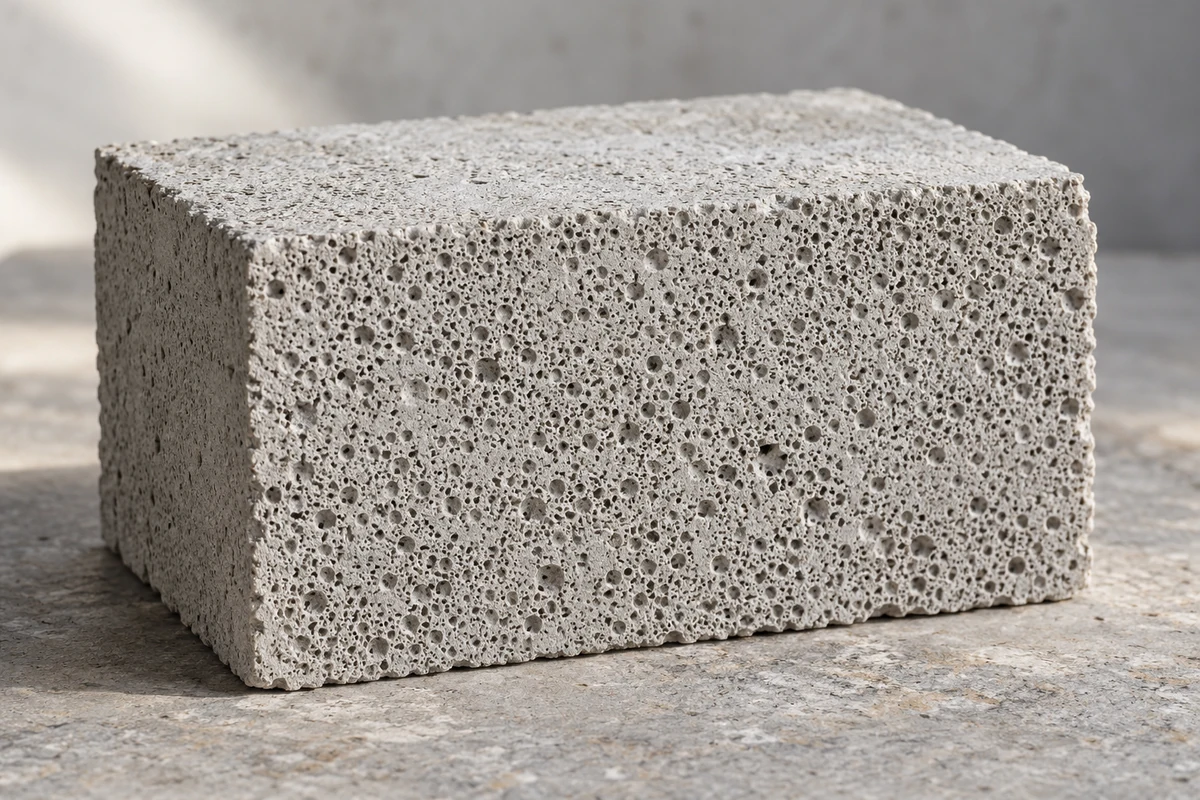
The representative detail shows air cells in a cementitious matrix. It does not assign density, strength or thermal performance.
- CLC
- Cellular cementitious material
- AAC
- Autoclaved aerated concrete
- EPS-bead mortar
- A distinct lightweight material
Different material names are not interchangeable.Confirm the supplied material, grade and supporting test evidence before comparison.
- Density
- Strength
- Thermal properties
- Test conditions
Then specify interfaces, finishes, moisture protection and installation checks.
Non-structural by default in this guide. Structural use requires a separate qualified design and verified material performance.
What makes CLC lightweight
CLC contains deliberately introduced air cells within a cement-based material. In foamed CLC, foam is mixed into the cementitious base to create those cells. The resulting density and performance depend on the mix and production control. ACI’s cellular concrete overview explains the principle; RISE’s CLC guidance describes the relationship between porosity, density and mechanical performance.
Keep the terminology clear when comparing quotations. CLC, autoclaved aerated concrete (AAC), lightweight aggregate concrete and EPS-bead lightweight mortar are not interchangeable product descriptions. AAC is an autoclaved product, as explained in H+H’s guide to aircrete. Ask suppliers to identify the actual material rather than relying on the word “lightweight” or transferring another product’s test results.
Balance weight with the required performance
Reducing density can improve the lightweight character of CLC, but it also changes its strength. Research on several low-density cellular concrete mixes found that pore structure and density affected mechanical performance. That evidence supports careful specification, not a universal strength claim for every CLC product. See the original study in Materials.
Start by describing the job: non-load-bearing infill, an insulating roof layer, or another engineered use. Then agree the required properties with the designer. Selecting the lightest available mix without checking handling, fixing loads, finishes and service conditions can create problems elsewhere in the building.
Where CLC can fit
SEED Materials publicly lists CLC for infill walling and roof insulation. These are sensible starting points for a project discussion, rather than permission to replace structural concrete. This guide treats CLC as non-structural unless a qualified engineer has designed and verified the proposed structural use.
For roof work, define what the CLC layer does and which layer keeps rain out. Lightweight insulating concrete can form part of a specified roof system, but the roof still needs compatible waterproofing, drainage, junction details and protection appropriate to its use. Siplast’s lightweight insulating concrete systems illustrate why roof performance belongs to an assembly, not an isolated material.
What to request before ordering
A useful technical submission should answer these questions:
- What are the specified dry density and strength, and which tests support them?
- What thermal conductivity has been declared, at what moisture condition, and for which product or mix?
- What are the curing, drying, shrinkage and surface-preparation requirements?
- Which mortar, render, waterproofing and finishing products are compatible?
- How will fixings, service chases and wall-to-frame junctions be detailed?
- Who approves the installation and checks that delivered material matches the specification?
Treat this as a procurement checklist for the designer and supplier, not a generic acceptance specification. Do not borrow a conductivity value from a different density grade or assume a dry laboratory value represents a wet roof in service.
Compare the completed construction
Ask for a like-for-like quotation covering material, delivery, handling, installation, finishes, testing and any necessary protection. A cheaper block or screed may not produce a cheaper completed wall or roof. Likewise, lower material weight does not by itself establish a particular reduction in foundation size, energy bills or embodied carbon.
If you are considering CLC for a house or other building, contact SEED with the location, drawings, intended application and performance requirements. Ask the team to confirm the suitable material grade and available scope of support before finalising the specification.